
How to Fish for False Albacore
By TackleDirect
Oct 9th 2024
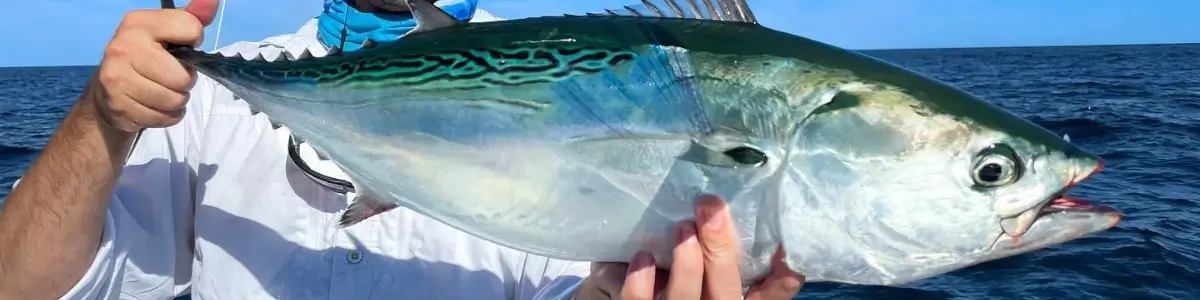
Learn how to catch false albacore with these tips, gear recommendations, and techniques from TackleDirect's experienced staff anglers!
False albacore, also known as little tunny, are a thrilling target for recreational anglers, especially along the East Coast of the United States. These fast-moving, hard-fighting fish offer an adrenaline-pumping experience, especially when they start schooling and blitzing baitfish on the surface. For those new to targeting these fish or looking to refine their approach, this guide will cover everything you need to know – from understanding what false albacore are, to why they're so popular among anglers, to the tips, techniques, and gear recommended by our experienced staff anglers here at TackleDirect.
What are False Albacore?
False albacore are often mistaken for their larger, more sought-after cousins like bluefin or yellowfin tuna. While they're not true members of the tuna family, false albacore still have a lot in common with their bigger relatives – speed, strength, and a preference for blitzing baitfish in frenzied feeding attacks. These fish have a distinctive body shape with a streamlined, torpedo-like profile, dark mackerel-like stripes on their back, and spots on their sides.
False albacore can grow up to over 40 inches in length and weigh over 35 pounds with the average size coming in much smaller, but don't let their smaller size fool you. Pound for pound, they fight harder than most inshore species, making them a favorite among light-tackle anglers. They're found from the Gulf of Mexico up to the Northeast, often appearing in large schools near the surface during the fall months as they chase down bait fish like sandeels, peanut bunker and silversides.
Why Anglers Love Fishing for False Albacore
Ask any seasoned angler, and they'll tell you there's nothing quite like hooking into a false albacore. The first reason is the fight. Once hooked, a false albacore will take off like a rocket, ripping line from your reel in blistering runs that test both your tackle and your angling skills. Their speed, agility, and endurance make for an exciting battle, and even smaller specimens can put your gear to the test.
Another reason anglers love targeting false albies is the visual aspect of the chase. These fish are notorious for blitzing on the surface, creating a spectacle of churning water, splashing baitfish, and frenzied predators. It's not just about hooking a fish – it's about the thrill of watching them attack your lure at high speed.
Finally, false albacore are an accessible gamefish. They can be caught from both shore and boat, making them a versatile target for anglers with different setups. Whether you're casting from a beach or pier, or chasing schools in your boat, false albacore offer an exciting fishing experience.
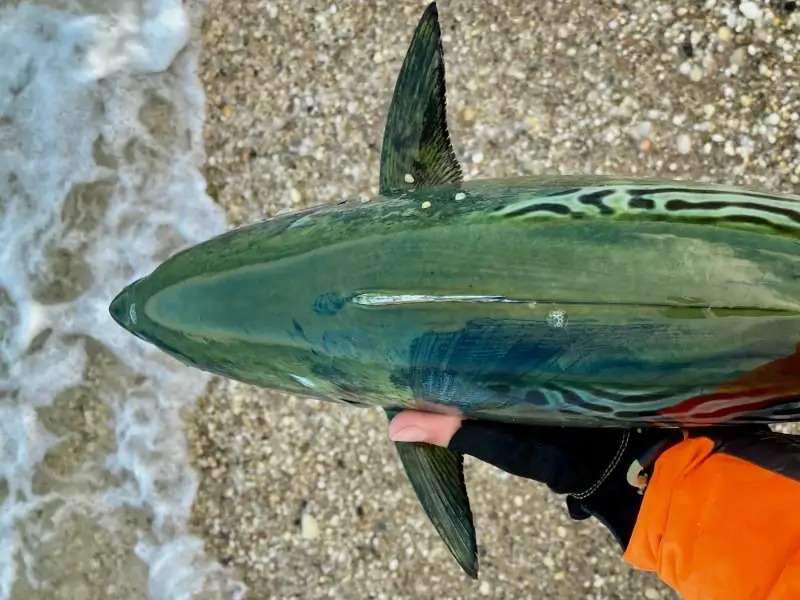
Overhead false albacore image provided by user @thebrooklynfisherman
Tips and Techniques for Catching False Albacore
The approach you take for targeting false albacore largely depends on where you're fishing – whether you're standing on a beach, casting off a jetty, or fishing from a boat. Here's how to tailor your technique for each scenario.
Shore Fishing for False Albacore
Fishing for albies from the shore requires patience and precision. These fish can sometimes come just within casting range, and it's up to you to make the most of that opportunity.
- Casting Distance: When you're on the shore, distance is your friend. Albies tend to stay just beyond the surf, so a long, accurate cast is critical. Use longer rods (8-10 feet) and lightweight, aerodynamic lures to get your bait in front of them.
- Retrieve Speed: A fast, erratic retrieve mimicking the fleeing baitfish is key to triggering a bite. Cast as far as you can and reel in quickly with occasional pauses to make your lure look like a panicked baitfish. Albies are opportunistic predators and will strike hard when they see something fleeing.
- Reading the Water: Pay close attention to bird activity and surface disturbance. Albies often push schools of baitfish to the surface, causing noticeable "boils". If you see birds diving into the water or baitfish jumping, it's time to cast.
Boat Fishing for False Albacore
Fishing from a boat allows you to be more mobile and follow the schools of fish, which can be a huge advantage when chasing albies.
- Chasing Schools: False albacore tend to move quickly. When you spot a school of fish breaking the surface, use your boat to get ahead of them, cut off their direction, and position yourself to cast. Avoid running directly into the school as it can spook them.
- Accuracy Over Distance: Since you can get closer to the fish from a boat, casting accuracy becomes more important than distance. A 7-8 foot rod with a fast action tip is perfect for quick, accurate casts.
- Vertical Jigging: If the albies aren't breaking the surface, try vertical jigging in deeper water using small metal jigs. Drop your lure down and reel it back up quickly. This mimics baitfish rising to the surface, which often entices fish to strike.
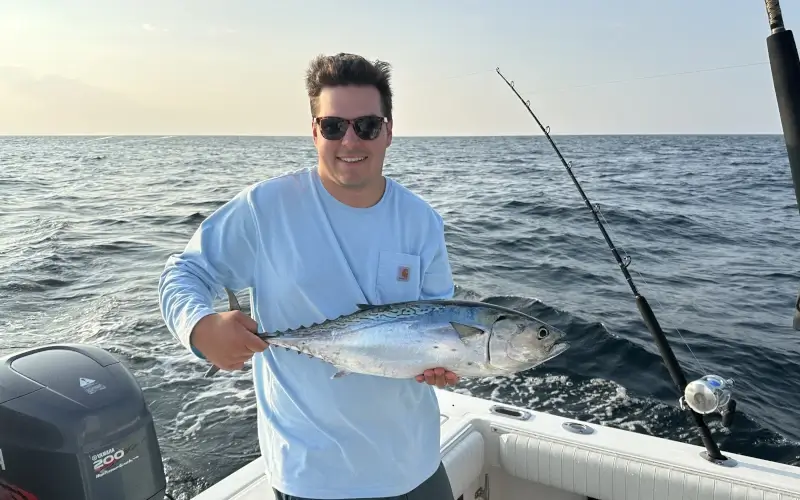
False albacore image provided by
Director of Customer Experience, Brian Brown
Tackle and Gear for Targeting False Albacore
Fishing for false albacore requires the right gear to handle their speed, strength, and long runs. There are some subtle differences in tackle when targeting false albacore from shore versus from a boat. The general goal for both is the same – present a lightweight, natural-looking offering to mimic baitfish – but the specific conditions of each fishing environment can affect your tackle choice. Here's a breakdown:
RODS
Shore Fishing: From the shore, you'll want a longer rod – typically 8 to 10 feet – to increase your casting distance. The longer rod also helps when you're fishing around rocky areas or jetties, as it gives you more control to steer fish away from structure. A medium-fast action rod is ideal for throwing smaller lures while still providing enough backbone to fight a strong fish.
Boat Fishing: On a boat, you don't need as much casting distance, so a shorter 7- to 8-foot rod works well. A medium to medium-heavy spinning rod with a fast action tip will give you the casting range you need while maintaining the strength to battle these powerful fish. You'll also want a rod that is sensitive enough to detect strikes quickly, as false albacore can sometimes hit your lure subtly before taking off.
REELS
Shore Fishing: Pair your rod with a spinning reel in the 4000 to 6000 size range. A high gear ratio (at least 6:1) is still important for retrieving lures quickly and keeping up with fast-moving fish. The reel should hold plenty of line – about 250 yards of 15- to 20-pound braided line – because false albacore can take long, blistering runs, and you don't want to get spooled.
Boat Fishing: A spinning reel in the 3000 to 5000 size range is ideal from a boat. You'll still want a reel with a fast retrieval rate and a smooth drag system, but line capacity isn't as critical since you can follow the fish. A reel with about 200 yards of 15- to 20-pound braided line should be sufficient.
LINE & LEADER
Shore Fishing: A thinner braided line (10- to 15-pound) can help maximize your casting distance, and a fluorocarbon leader (15- to 20-pound) is essential for its abrasion resistance around rocks, jetties, and sharp-toothed fish.
Boat Fishing: Since you'll be fighting these fish in open water, you can get away with slightly heavier braided line (20-pound) and a fluorocarbon leader in the 20- to 25-pound range. This setup gives you a bit more control when battling a strong fish close to the boat, and the heavier leader helps with abrasion resistance from the fish's rough mouth and sharp teeth.
TERMINAL TACKLE
Snap swivels, strong hooks, and split rings are all essential when targeting false albacore. Since these fish strike aggressively, you'll need quality hardware that can handle the stress of high-speed runs and sudden changes in direction.
Shore Fishing: You'll want to match the hook size to the small profile of the baitfish false albacore target. Typically, single hooks in the #2 to 1/0 range or small trebles (if using hard baits) are appropriate. These sizes keep your presentation as natural as possible while ensuring a solid hookset.
Boat Fishing: Boat anglers tend to use slightly larger hooks, especially when vertical jigging. Hooks in the 1/0 to 2/0 range are common, giving better holding power for longer, harder fights when using deeper-water tactics.
LURES & BAIT
Shore Fishing: When fishing from shore, casting distance and lure choice are critical. Lightweight metal jigs like the Hogy Epoxy Jig or Deadly Dick are perfect because they cast well and mimic the small baitfish false albacore chase. Cast as far as you can, and retrieve quickly with occasional pauses to mimic a fleeing baitfish.
Boat Fishing: Fishing from a boat gives you the advantage of getting closer to the fish, so smaller, more subtle lures can be used. Metal jigs, small surface plugs, and soft plastics all work well, but you may not need to cast as far. The retrieve speed is still crucial – keep it fast and erratic to entice strikes. You can also try vertical jigging in deeper water when false albacore are not blitzing on the surface.
TACKLE ACCESSORIES
FISHING APPAREL
Staying comfortable on the water is key, especially when chasing fast-moving fish. A good pair of polarized sunglasses is essential for spotting schools of albies and reading the water. Light, moisture-wicking apparel is recommended, along with a good hat to block the sun. Sun gloves and face buffs are also great for protecting your skin from harmful UV rays during long days on the water.
Ready to Chase Some Little Tunny?
Fishing for false albacore is one of the most exciting experiences an angler can have. From the visual spectacle of their feeding frenzies to the heart-pounding fight once you've hooked one, these fish are a must-target for anyone looking for fast-paced action on the water. In both shore and boat fishing, the key to selecting terminal tackle for false albacore is to match the conditions and bait size. While shore anglers focus on casting distance and lighter setups to reach feeding fish, boat anglers can afford to use slightly heavier tackle and adjust techniques based on fish depth. Regardless of where you're fishing, keeping your presentation natural and close to the size of local baitfish is essential for success.
So, gear up with everything you need from TackleDirect and get out there. The next time you see a school of false albacore blitzing the surface, you'll be ready to cast and experience the thrill of a lifetime!
Happy Fishing!
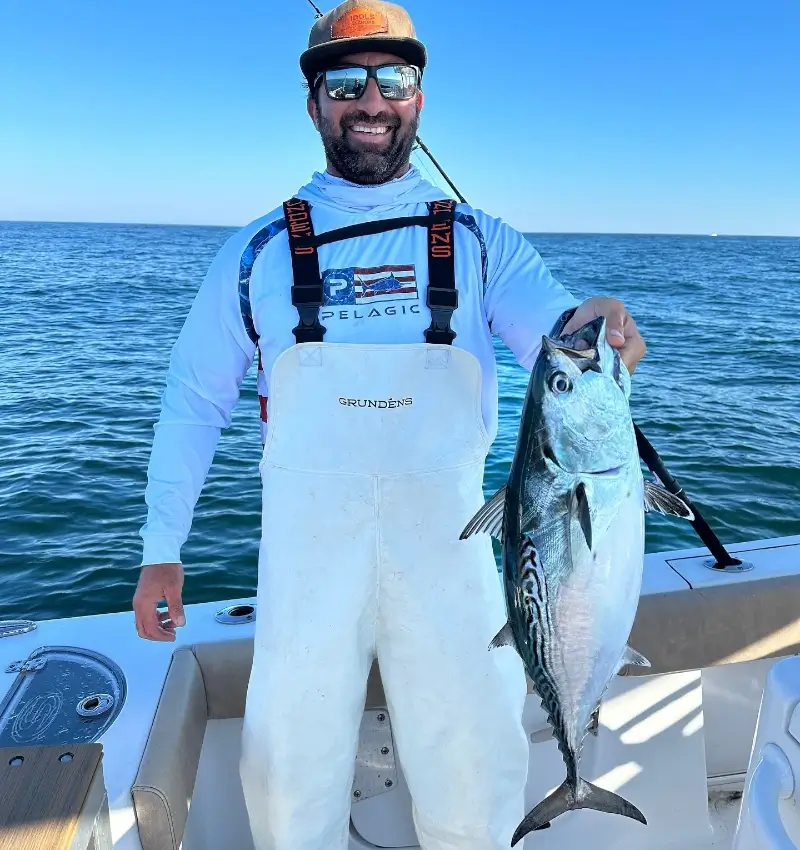
False albacore image provided by user @narceddiving
Main Banner Image
Provided by user
@stephentlobosco
Want a chance at getting your fishing image featured?
Just Tag Your Next Catch With #HookedOnTD.
Head on over to the for more details.