
Red October in Florida
By TackleDirect
Oct 11th 2023
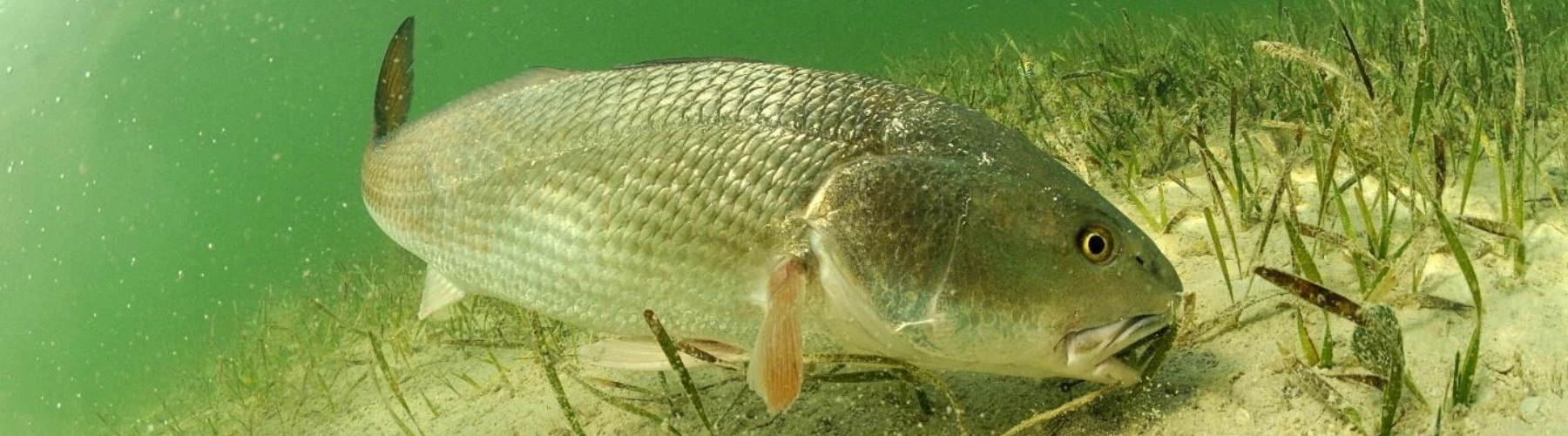
Chase redfish in the southeast throughout the autumn months with these top tips from TackleDirect. Learn essential tips, techniques, and tackle for a successful adventure in "Red October."
Red October Tips and Techniques
The month of October is the time for huge jack-o-lanterns – and in the southeast, it's a time to catch redfish, aka red drum. Late summer and fall are the prime months for redfish fishing, as these fish are in their spawning season, making them larger, hungrier, and more aggressive. This time of year has become so prolific for redfish that some local anglers affectionately refer to it as "Red October."
Understanding why October is such a prime month for redfish fishing requires delving into the biology and behavior of this top gamefish. Redfish, like many other fish species, follow an annual spawning cycle. During their spawning season, which typically spans late summer and early fall, redfish gather in large numbers to reproduce. This biological imperative drives them to feed aggressively to build energy reserves, which in turn makes them prime targets for anglers.
While October presents an excellent opportunity for redfish angling, you can't just make a cast in a random spot and expect to land a fish. Redfish may be more abundant and aggressive during this season, but they are still intelligent and elusive creatures. To maximize your chances of landing these prized fish, it's crucial to delve deeper into the tips, techniques, and tackle required for successful October redfish fishing.
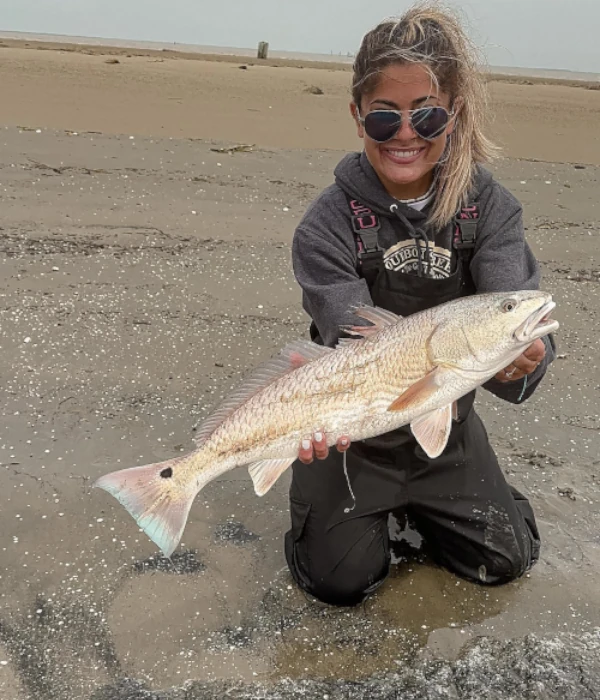
Redfish image provided by user @keyschickk
Where to Find Fall Red Drum
Although you won't be subject to the frigid temperatures of the Northeast or the Great Lakes, Florida's coastal waters will cool off as you get into the fall. As the water falls into the mid-70s or lower, redfish begin to move away from the shallow open flats where they spent their summer months. These areas, which were teeming with redfish during the warmer months, can become sparsely populated in just a matter of weeks. To maximize your chances of success, be prepared to adapt your fishing strategy.
Instead, fall redfish look for deeper, more confined areas that have warmer water. If the current is funneling baitfish to them, even better – the cooling water slows down a redfish's metabolism, so they're less willing to hunt for their food. Some productive locations to target include cuts, points, and ledges, as well as shorelines along sandbars and channels. You might still be able to find some redfish along the deeper edges of the flats, too. As temperatures continue to fall, head to the mouths of creeks and rivers, especially if they have structures for redfish to gather underneath.
Lures and Baits for Redfish
Once you've arrived at the right location, you need the right lures. Luckily for you, redfish in October are like most trick-or-treaters – they're looking for an easy treat and won't be too picky. The two most important things are matching your lure to the local forage and nailing the presentation. Redfish are aiming for big baitfish, so do the same and use saltwater lures in the 3-5-inch range. You may also want to choose spoons or other vibrating lures as well as baits with flashy colors, as they attract the eyes of fish in deep, dark waters.
As for the specific types of lures, artificial shrimp lures are often a good bet if you're casting near an oyster or sand bar, and shrimp do well if you're on the edge of an estuary. If you're trying to entice topwater bites, poppers might be able to do it. Finally, consider live bait – many anglers recommend live shrimp and mullet to whet a red drum's appetite.
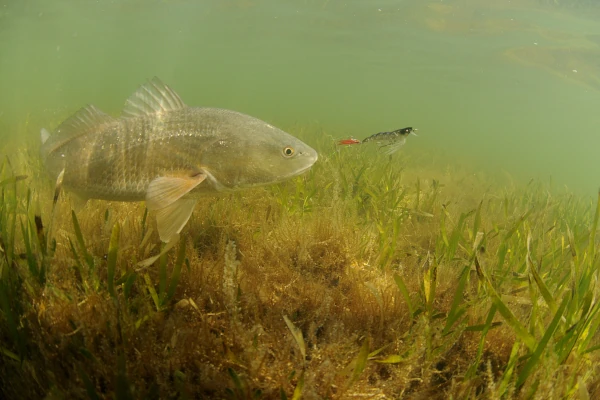
A redfish going after a shrimp lure
Matching Lures to Local Forage
Here's a breakdown of the key considerations when choosing your lures and bait:
- Lure Size: Redfish are targeting bigger baitfish during this season, typically in the 3-5-inch range. Using lures of this size closely matches their preferred prey and increases your chances of success.
- Vibrating Lures: Spoons and other vibrating lures can be highly effective for redfish. These lures create underwater vibrations and noise that can attract redfish from a distance, especially in murky or dark waters where visibility is limited.
- Flashy Colors: In the deeper and darker waters that redfish often inhabit in October, baits with bright and flashy colors are advantageous. These colors can capture the attention of redfish and trigger a strike response.
Specific Types of Lures:
Consider the following lure types based on your fishing location and conditions:
- Twitchbaits: When bait fish like mullet are prevalent, a twitchbait can be extremely productive. Remember that as water temperatures cool off, work the lure slower for more success.
- Shrimp: If you're fishing on the edge of an estuary or in areas where shrimp are prevalent, using shrimp imitations can be effective. Shrimp are a natural part of the redfish diet, and these baits can work wonders.
- Poppers: When you want to entice fish to the water's surface, poppers are a go-to choice. Their surface commotion can provoke aggressive strikes, and redfish often respond well to this topwater action.
- Live Bait: Many anglers swear by live bait for redfish. Live shrimp and mullet are popular choices to arouse a red drum's appetite. Live bait offers a natural and enticing presentation that can be hard for redfish to resist.
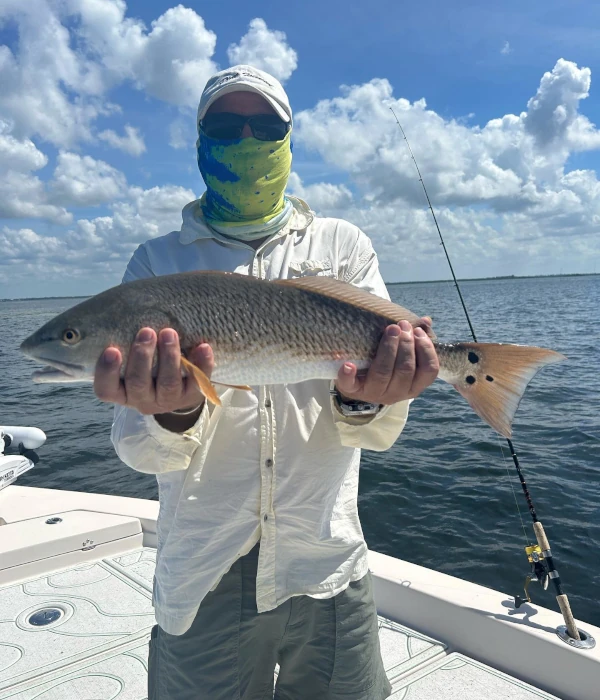
Redfish image provided by user @lockedinfishingcharters
Tackle and Techniques
There are two primary fishing methods commonly used for Redfish, each with its own unique characteristics and skill requirements.
Spinning Rod & Reel Tackle
Spin fishing is a fantastic choice for beginners and anglers who prefer a straightforward approach.
- Gear Selection: You'll want a medium spinning rod paired with a suitable spinning reel in the 3000 size range for slot sized redfish. For bull redfish you will want to up your tackle a bit.
- Polarized Sunglasses: One of the critical aspects of spin fishing for redfish is clear visibility. To effectively sight-cast to redfish, you'll want to invest in a good pair of polarized sunglasses. These sunglasses reduce glare on the water's surface, allowing you to see beneath it more clearly. This is essential for spotting redfish as they cruise the shallows, hunt for prey, or tail in the water.
- Sight-Casting: Sight-casting is the hallmark technique for targeting redfish. It involves visually spotting redfish and then precisely casting your lure or bait to them. This technique requires keen observation, patience, and precision. Redfish can be notoriously stealthy, so your ability to spot them before they spot you is a significant advantage.
- Lure and Bait Presentation: Once you've located a redfish, your presentation becomes critical. Cast your lure or bait ahead of the fish's path, allowing it to naturally intercept the offering. The goal is to make your presentation appear as natural as possible to trigger a strike.
Baitcasting Rod & Reel Tackle
Baitcasting is a versatile technique that can also be effective for targeting redfish.
- Gear Selection: Use a baitcasting reel paired with a casting rod. Choose a rod with the appropriate power and action to handle the size of the redfish you're pursuing.
- Bait Selection: When using baitcasting gear, you can opt for live or cut bait or even lures. Popular choices include shrimp, crabs, mullet, pinfish, and menhaden. Live bait can be presented on the bottom using a Carolina rig or under a popping cork rig.
- Casting Accuracy: Baitcasting requires accurate casting, as you'll need to place your bait close to the redfish's feeding area. Practice your casting skills to ensure precision.
- Patience and Persistence: Unlike sight-casting or blind-casting with lures or flies, baitcasting often involves waiting for the redfish to find and bite your bait. Patience and persistence are key when using this technique.
Fly Fishing
Fly fishing is a more advanced technique that appeals to experienced anglers.
- Specialized Gear: Fly fishing for redfish is an advanced technique that appeals to experienced anglers. It requires specialized gear, including a saltwater fly rod and an appropriate fly reel. These rods are designed to handle the demands of saltwater environments and the power of redfish.
- Saltwater Flies: In fly fishing, the choice of fly is crucial. You'll need flies designed to mimic the local forage, such as shrimp, crabs, or baitfish. These flies are often tied with durable materials that can withstand the saltwater environment.
- Blind-Casting: Unlike sight-casting, which relies on spotting the fish before casting, fly fishing often involves blind-casting. This means you cast without directly seeing the fish, relying on knowledge of redfish behavior and likely locations. It's a skill that requires experience and a deep understanding of where redfish are likely to be.
- Casting Skills: Fly casting is an art in itself and requires skill and practice. You'll need to learn various casting techniques, including the basic overhead cast, roll cast, and double haul, to effectively present your fly to redfish. It's essential to practice casting to improve accuracy and distance.
- Retrieval Techniques: Once your fly is in the water, you'll need to employ retrieval techniques that mimic the natural movement of prey. This might involve stripping the line to imitate a fleeing baitfish or gently twitching the fly to resemble a struggling shrimp.
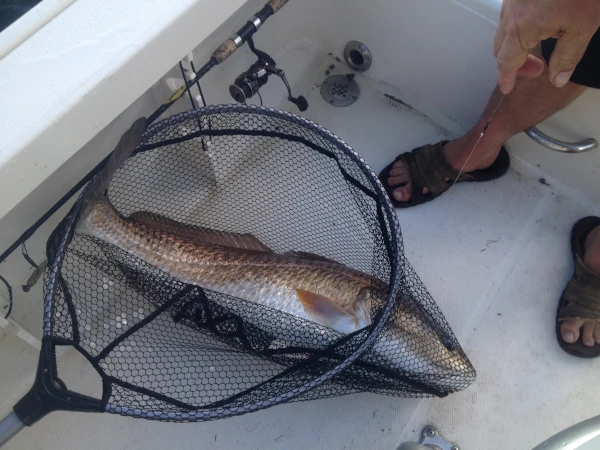
A redfish in a landing net
Gear Up and Go
October redfish fishing in the southeast offers an exciting opportunity to catch some impressive red drum. By understanding where to find these fish during the fall and selecting the right tackle and baits, you can enhance your chances of success.
Whether you opt for spinning, casting or fly fishing tackle, honing your skills and adapting to the conditions will help you make the most of this exciting season for redfish. So, gear up, head to the warmer waters, and get ready to tangle with these prized fish during "Red October."
Want a chance at getting your fishing image featured?
Just Tag Your Next Catch With #HookedOnTD.
Head on over to the TackleDirect Social page for more details.