
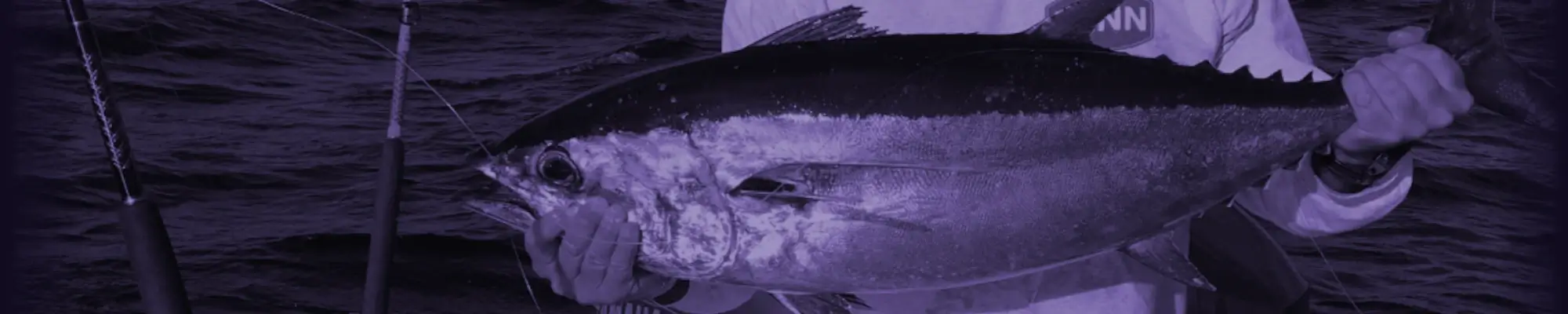
Jigging for Blackfin Tuna
While blackfin tuna can often be found close to the surface early in the morning and late in the afternoon, they can often be found around or below the thermocline for the rest of the daylight hours. While a planer or downrigger can add a depth dimension to your trolling spread that still may not be enough to get in on the bite. When blackfin are holding deep in the water column and trolled or chunked baits are not able to get down into the strike zone easily, dropping down jigs can be an effective way to put together an impressive catch while your dockmates troll around all day and come home with the dreaded skunk.
Both spinning and conventional gear will be suitable for jigging, based mostly on preference. A suitable spinning setup would include a Shimano Saragosa 6000 or Daiwa Saltist 4500 reel matched up with a Shimano Trevala TVS-66MH or OTI 200S Fathom Blade. If you prefer to go with a conventional setup, a Shimano Talica 10II, or Accurate BV-500 matched with a Trevala TVC-66MH or OTI 200C Fathom Blade Jigging Rod would do the trick. An ideal line for either reel would be 40-50lb braided line, which will increase line capacity due to its thin diameter while allowing you to go with a smaller and overall lighter reel.
Knowing the depth that the tunas are holding at is crucial for maximizing your potential chances to hookup on the jig. This means that you will need to rely on your electronics, especially your sounder to give you an accurate reading on how deep the bait and fish are holding. After you have used your electronics to find the correct depth to start out, using a metered braid like Power Pro Depth Hunter, Daiwa J Braid and Saltiga Braid, or Momoi Verifier. These lines change color for a given length of line, so you can get your jig right below the strike zone and work up towards the surface.
While your leader usually does not have to be as stealthy as when chunking, the connection to your braid is extremely important. 40-60lb fluorocarbon is often the ticket, and if you are not using a windon to connect to your mainline, you can get away with an Albright or uni to uni knot for your connection.
After you have your setup complete, you can now worry about the jigs you plan on using and how to connect them. In order to quickly change out between jigs in your jig bag, it is best to connect a solid ring with an assist hook or two and a split ring directly to your main line. With a good pair of split ring pliers, you will be able to effortlessly remove and attach a new jig in seconds instead of having each jig in your bag fully rigged with all of the terminal tackle. This will also make stowing your jigging rod in between spots much easier and safer, since you can fully remove the jig in seconds and prevent it from swinging around the cockpit. Shimano Flatside and Flat Fall Jigs are a great place to start, along with OTI Jager Jigs, and the old standard diamond jig. Not a bad idea to grab a jig bag as well to keep all of your new blackfin jigs organized and ready to go in a pinch!